
Guides · Tube fabrication
Tube fabrication
Structural, lever and linkage tubes that need more than a cut and a bend, finished under one roof.
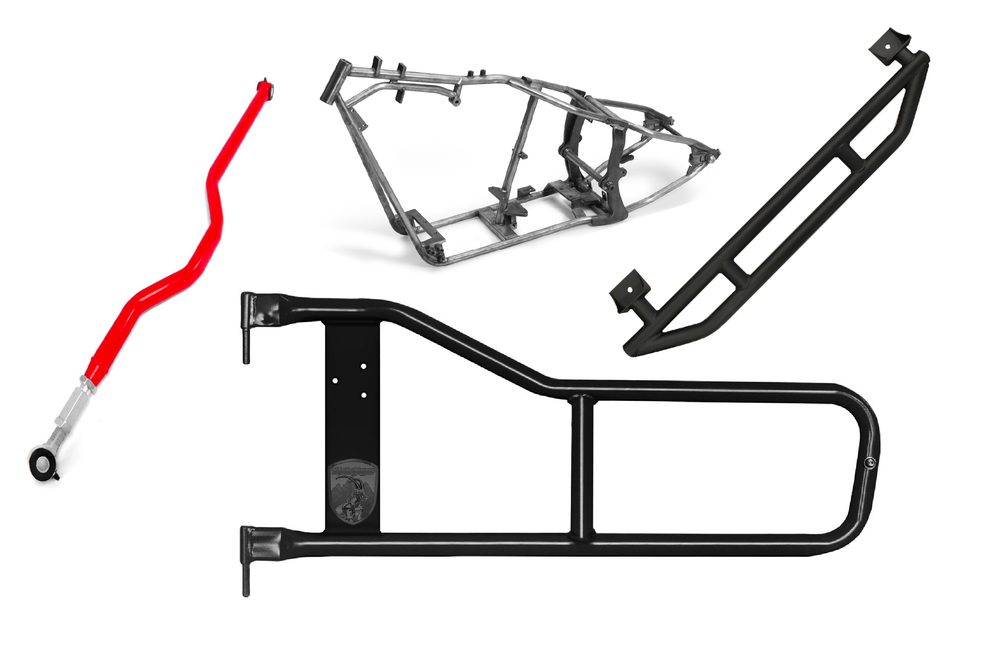
Our tube-fabricating niche is more nuanced than our other competitive niches, because it is defined as much by the combination of operations on the part as by the tube itself.
Is your tube in our niche? If your tube is for a structural, lever or linkage application, runs in volumes of 100 to 5,000 per shipment, combines operations such as rotary swaging, upset forging, welding, powder coating, machining or pressed-in bearings and linkage ends, has a wall thickness of 0.06" or greater, and an OD between 5/8" and 1.5", chances are it falls squarely within our competitive niche and capabilities.
Rotary swaging
Rotary swaging is a hot forming process where a series of ‘hammer’ blows reduces the diameter of the tube (or bar, or flat bar) into a smaller round shape. This forging process creates a tapered transition in which the grain structure of the steel is aligned in a linear fashion, which in turn increases the basic strength properties of the steel. The reduced (swaged) section can then be further formed, flattened or bent, or machined, threaded internally or externally.

Press forming
Press forming tubes is common for braces and grab handles, but it can also be used to stake other components or to include inserts or sleeves into or onto the part. Using an insert or a sleeve is a great way to add strength only in the areas that require it, without having to use a larger, more costly and heavier tube along the full length of the part.
Upset forging
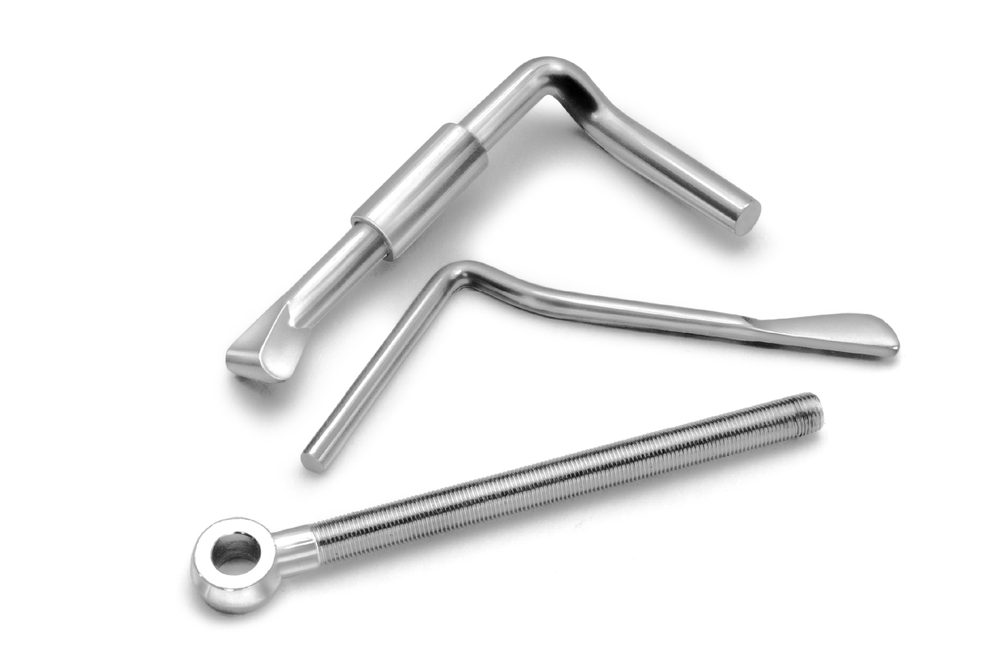
Upset forging can be used on tubes as well as on bars and flat bars. A typical example is a grab handle for a construction-equipment machine, run 250 pieces at a time: the process there is swaging, then upset forging, then threading, then powder coating. See the upset forging guide for more.
Welded & powder coated
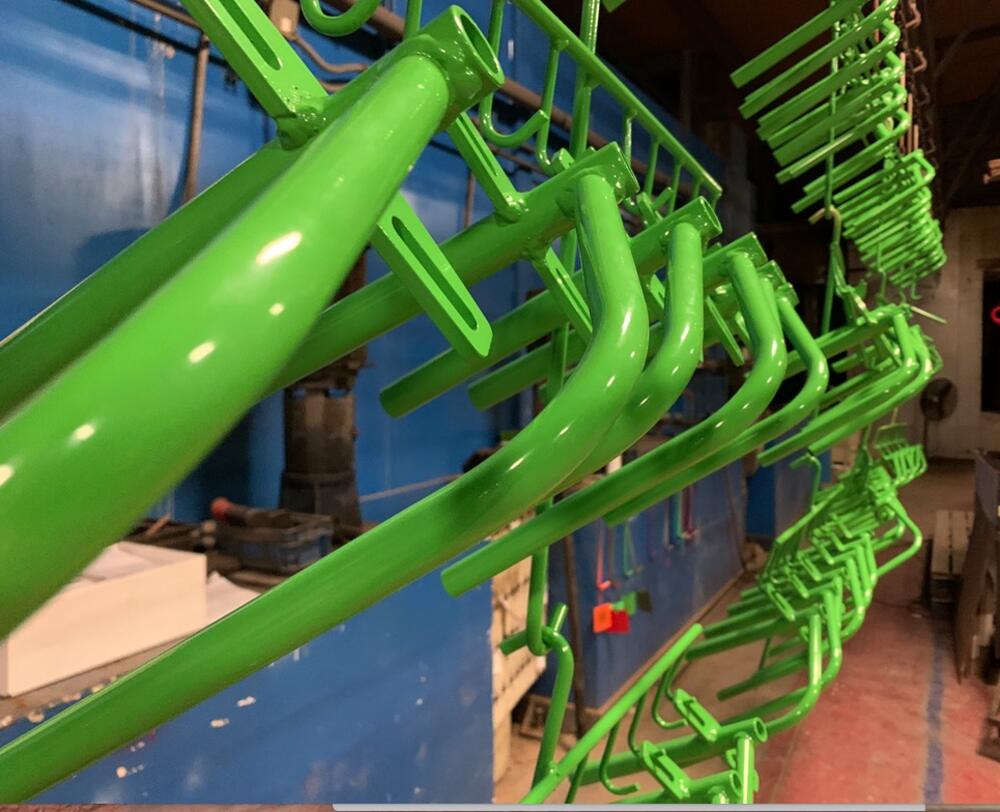
Structural tubes with welded subcomponents of bar or plate, subsequently powder coated, are a great niche of ours thanks to our vertical integration across all three materials, bar, tubing and plate. One supplier handles the tube, the welded-on features and the finish on one schedule.
Putting threads on a tube end
One of the most common tube decisions is how to add threads. Representative comparison for a 24-inch tube, 1.05" OD × 0.109" wall, powder coated, with 1/2-20 threads:
| Qty | A: Swaged ends | B: Weld-in female | C: Swaged tapped female |
|---|---|---|---|
| 5 | $210.08 | $190.49 | $318.49 |
| 25 | $55.07 | $53.34 | $87.05 |
| 50 | $35.70 | $36.19 | $58.12 |
| 100 | $26.01 | $27.62 | $42.04 |
| 500 | $17.31 | $19.69 | $29.95 |
Representative comparison only, not a quotation. Figures illustrate relative cost between methods; current pricing is confirmed per job.
How to read it: swaged one-piece ends and weld-in female threads land close together, and both come in well under a swaged tapped female at volume.